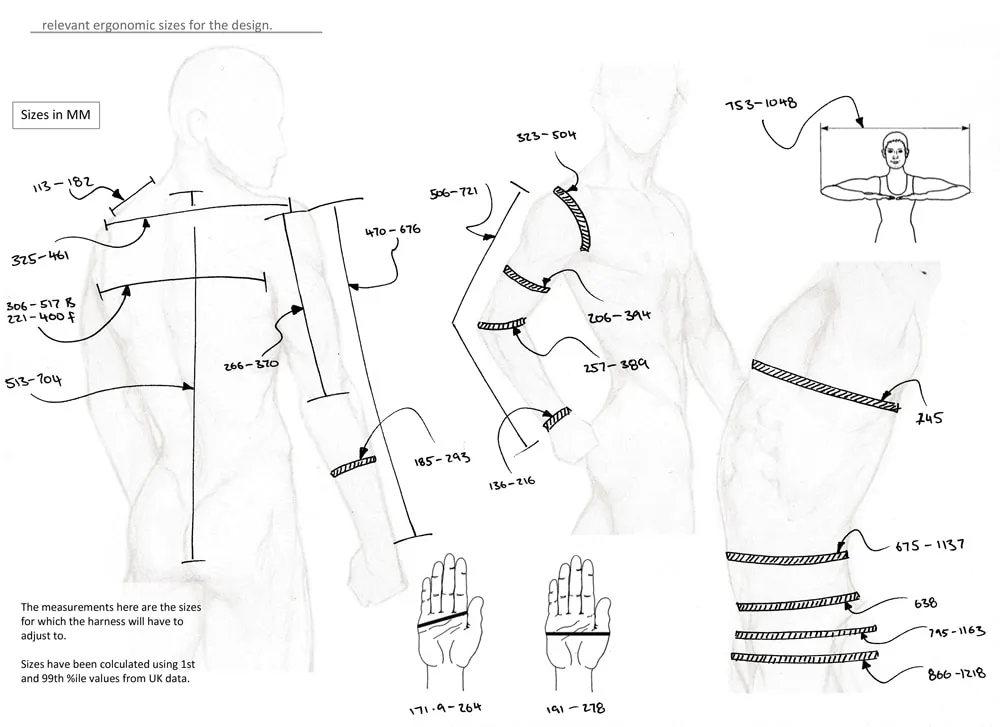
In my final year at Loughborough University I chose to do a project that combined ergonomics, 3D printing, modular design, fabric, sportswear, and protective impact and abrasion resistant materials.
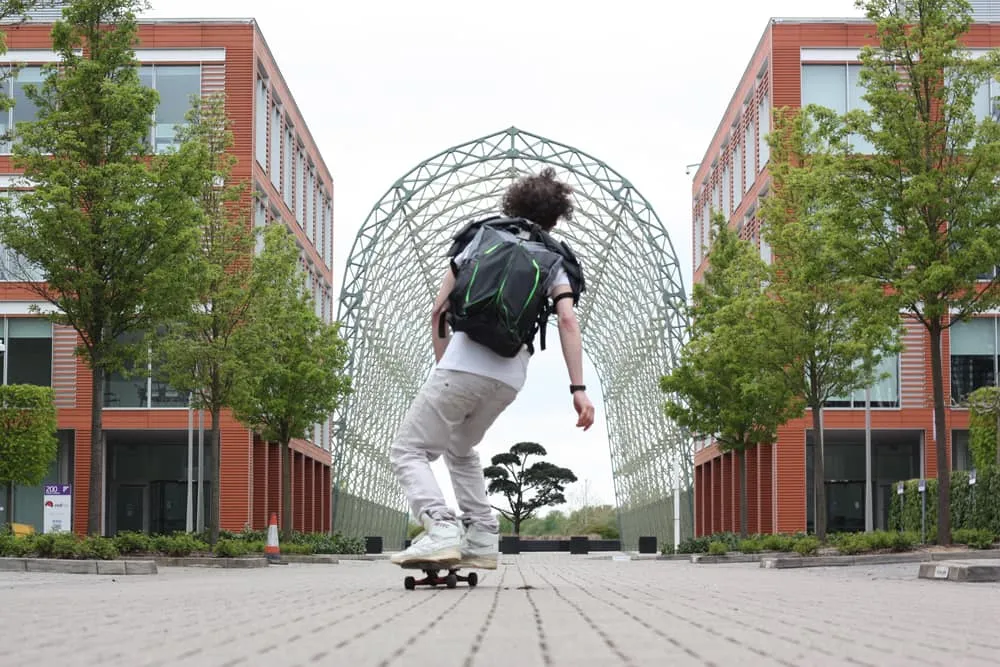
I was using a skateboard to travel from my house to university multiple times a day while carrying a laptop, camera, books, iPad, and other items. The brief I set myself was to design a product that solved this problem properly.
Layered Modular Design
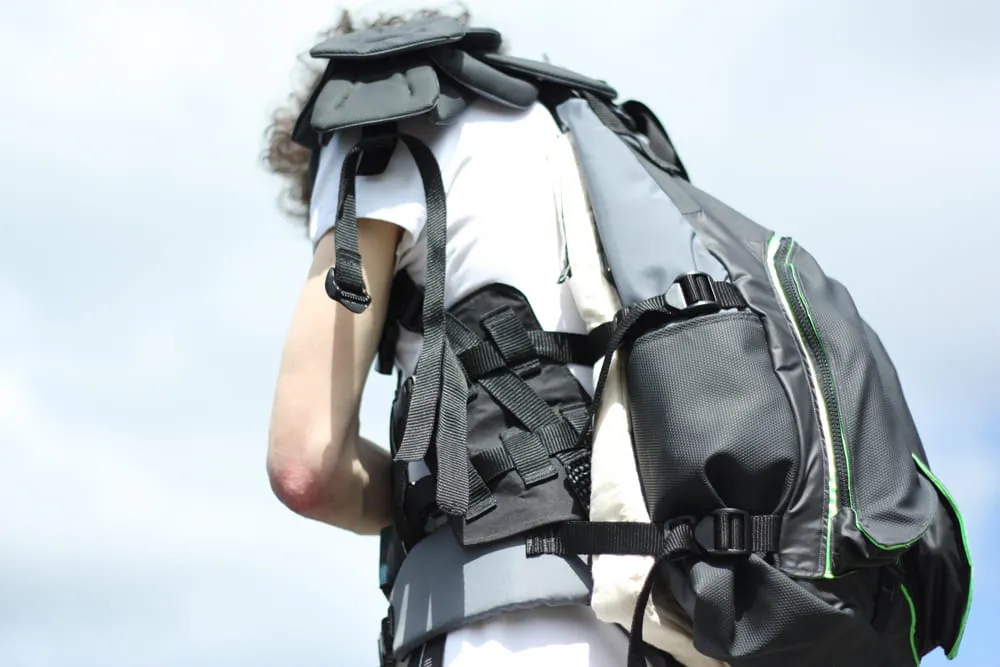
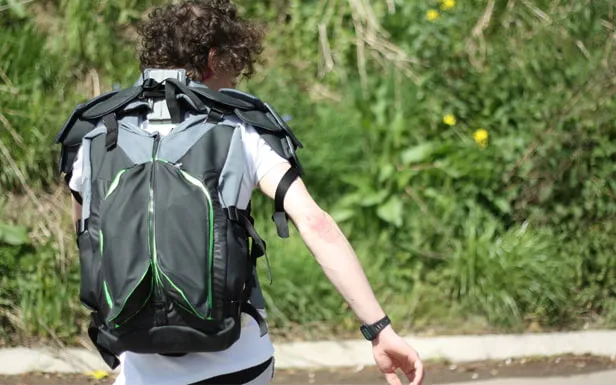
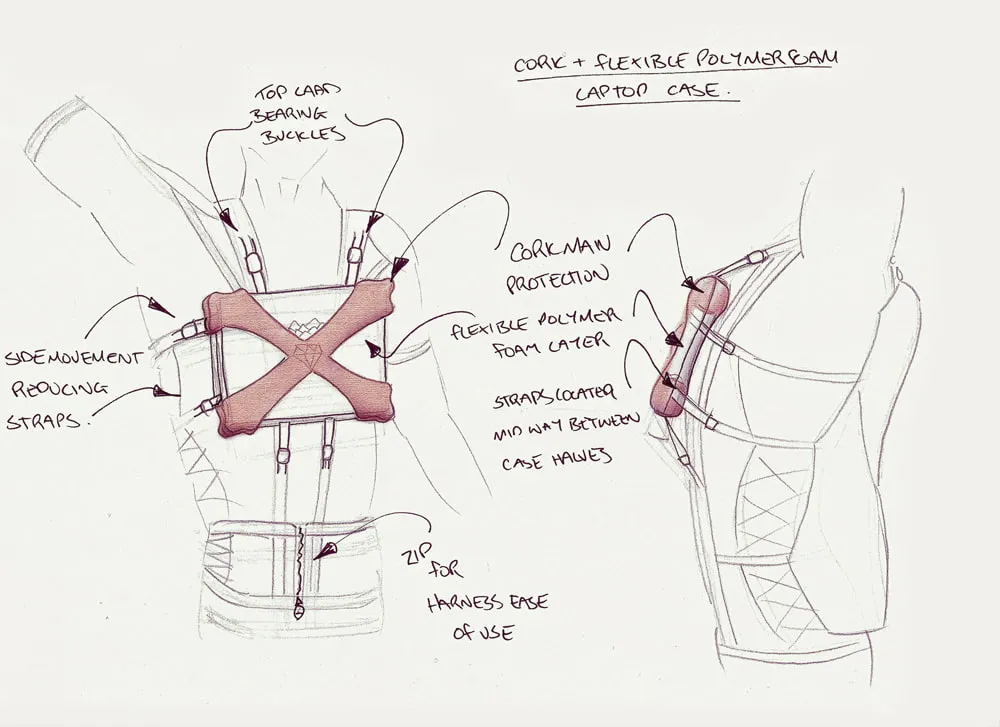
Each layer provides a different modular function for the product.
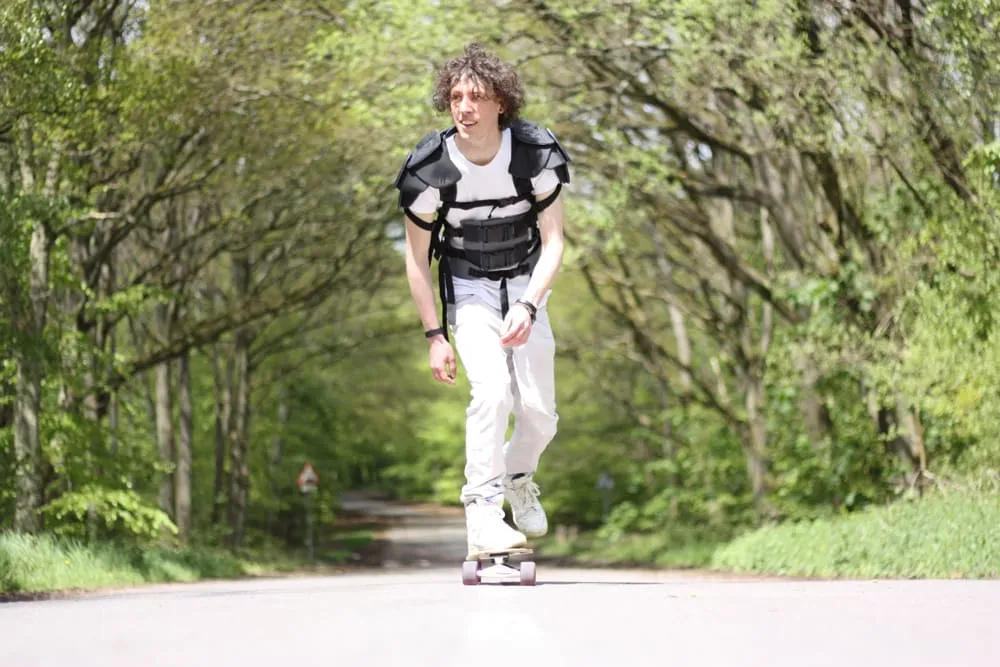
Designed for commuters
Harness provides both balance and security for mobility.
Protection by design
Protection for both the enclosed items and for the wearer.
Concept Sketching
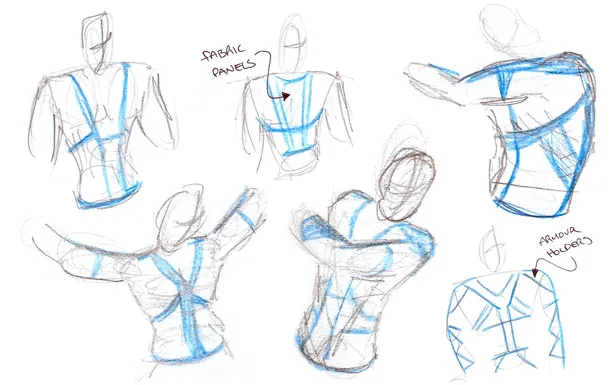
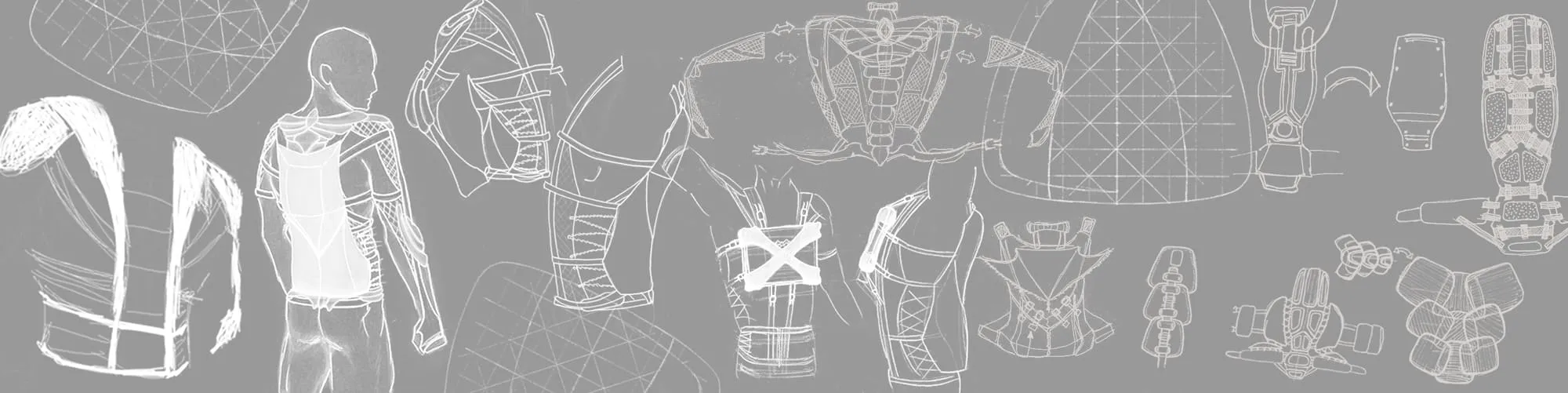
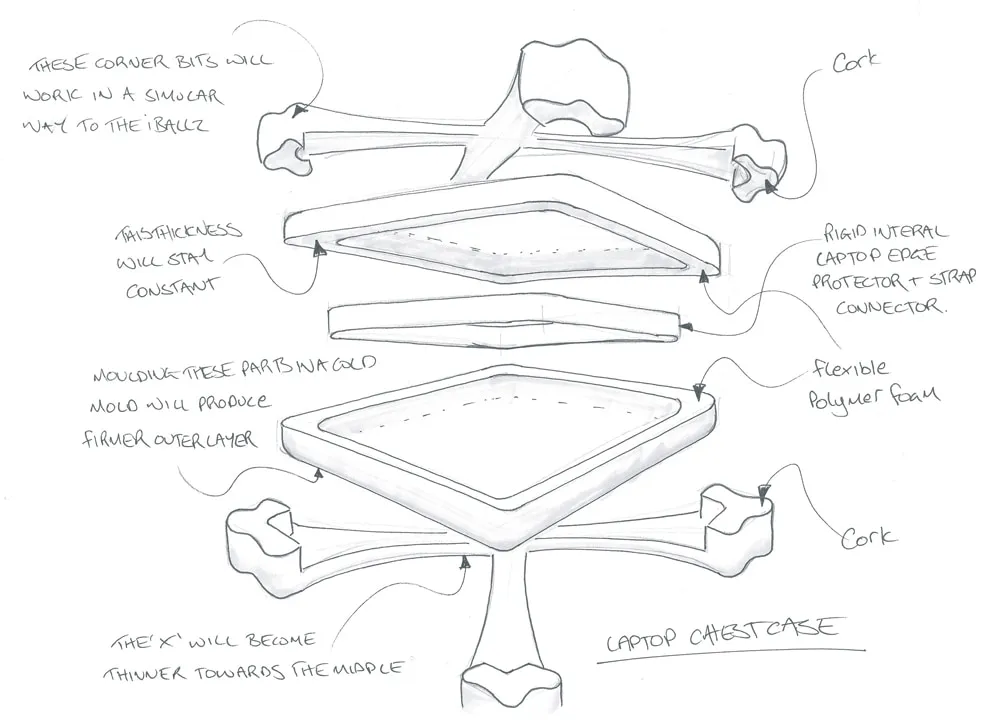
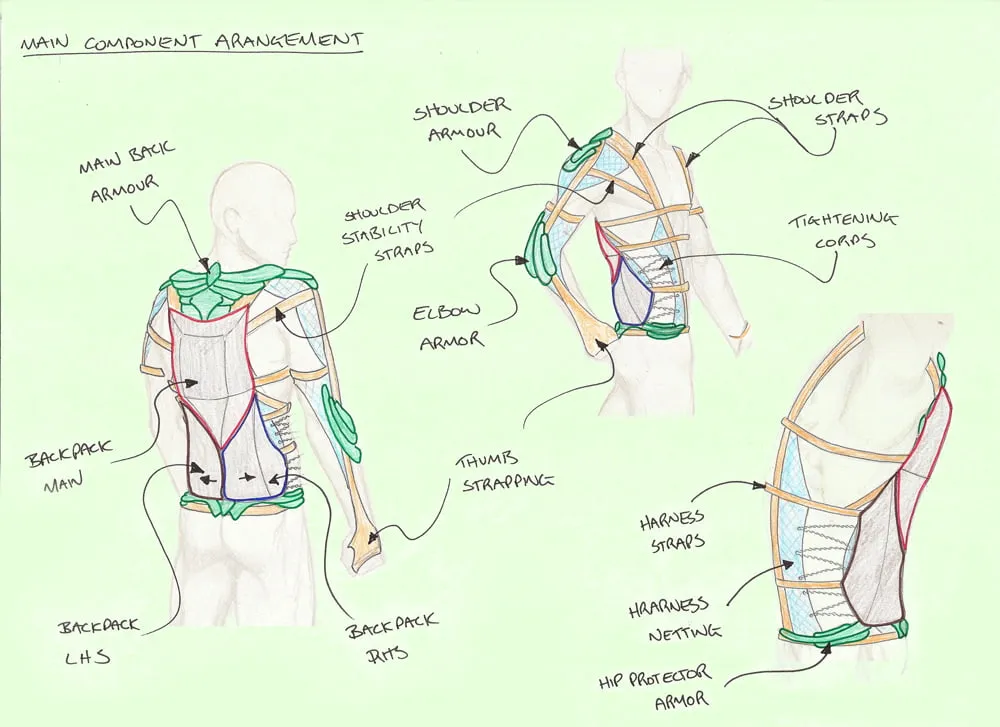
The project began with concept generation. I knew I wanted a harness with additional modular features, but the final form was entirely open. Early sketches explored basic harness styles before adding detail to rough out how the backpack and armour sections would be formed.
Body Armour Concepts
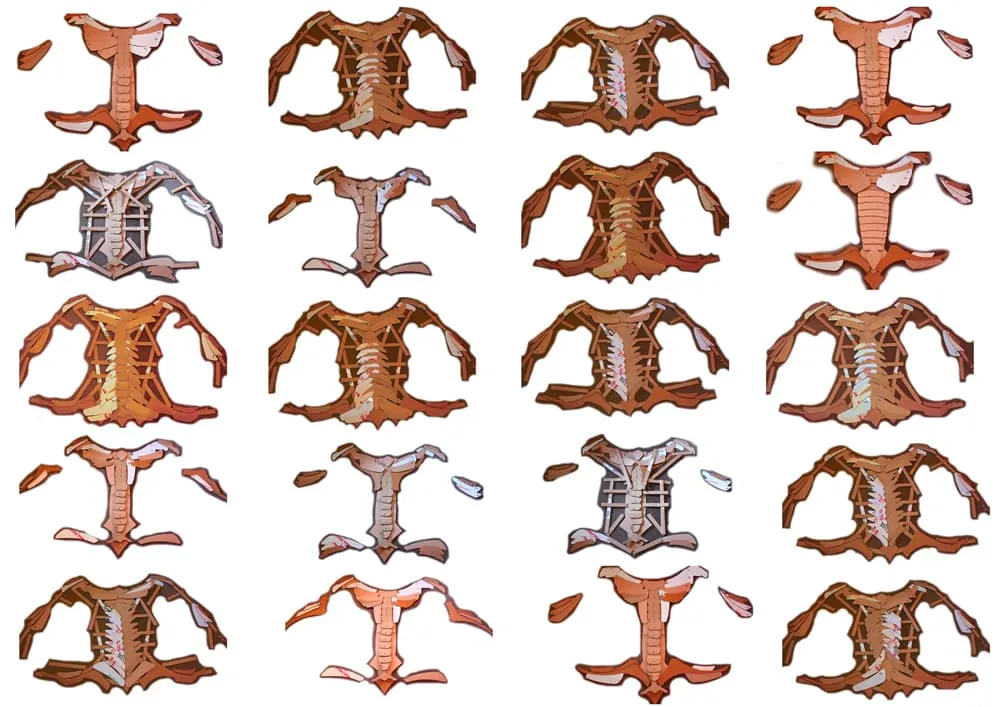
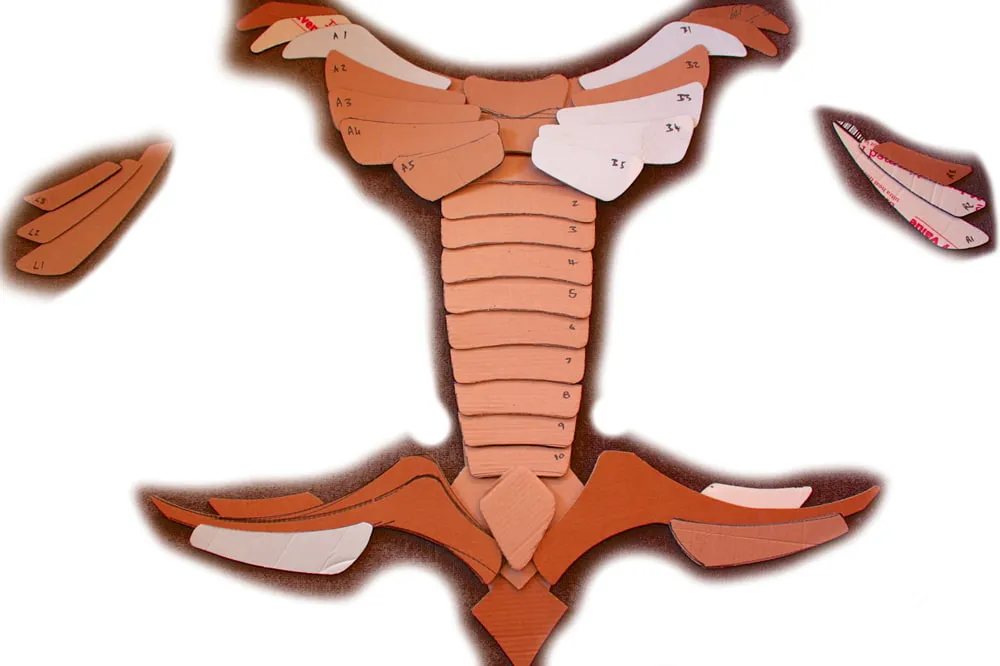
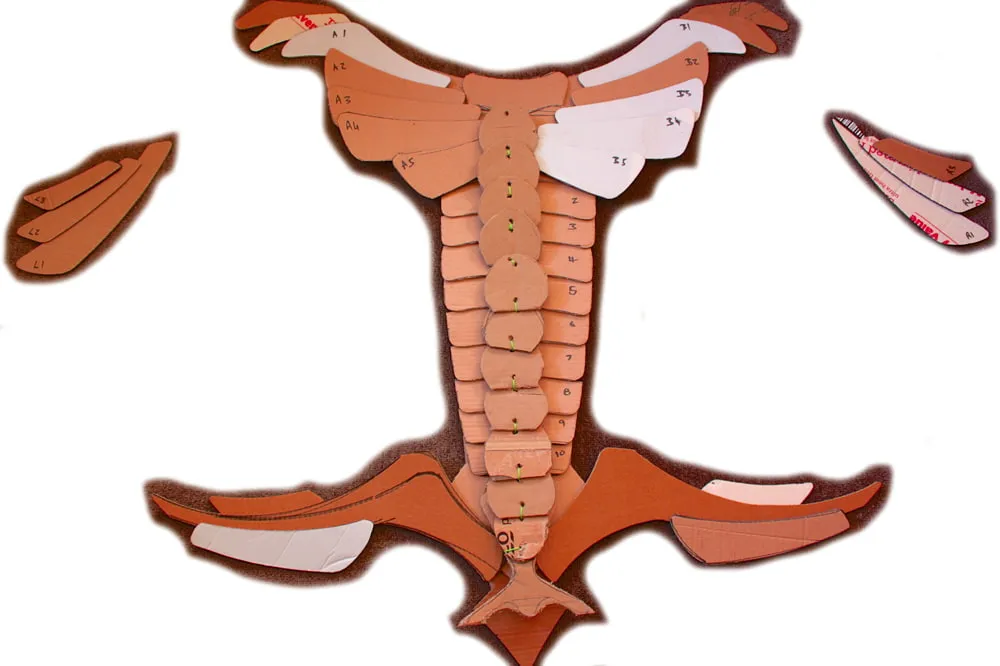
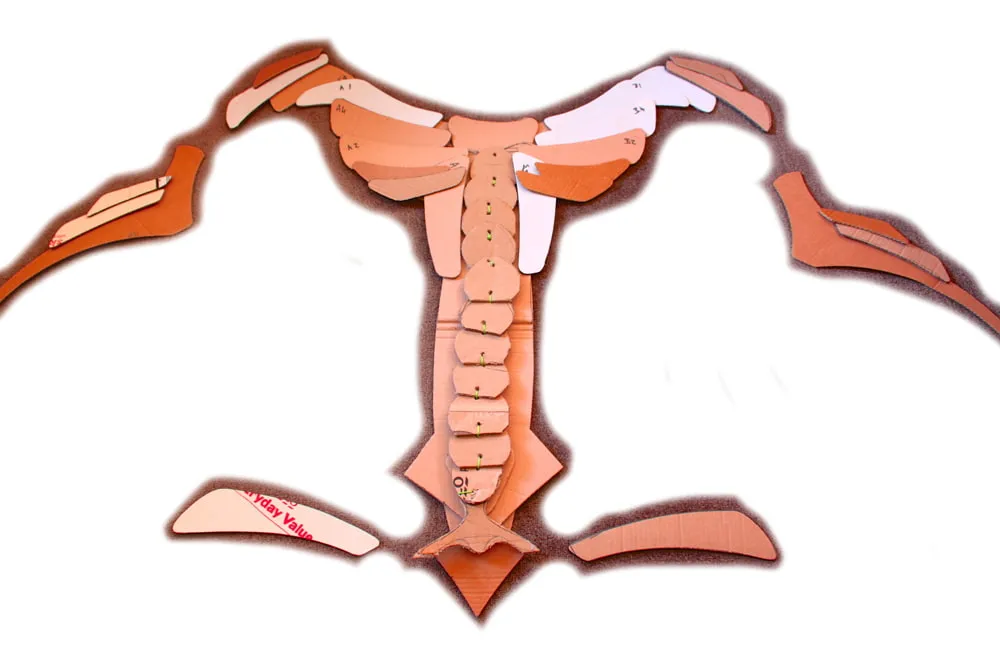
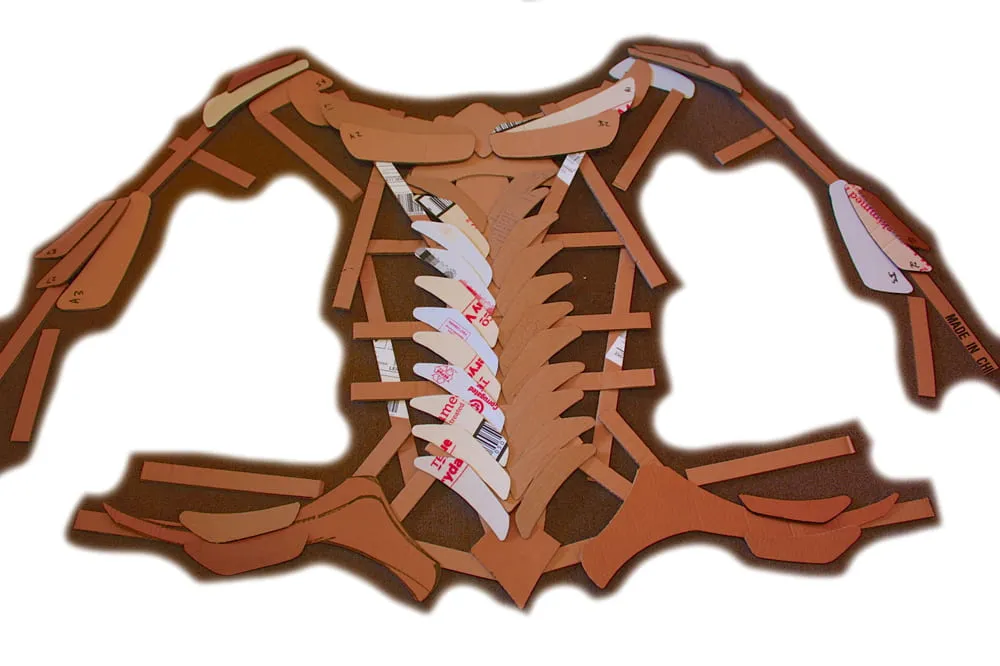
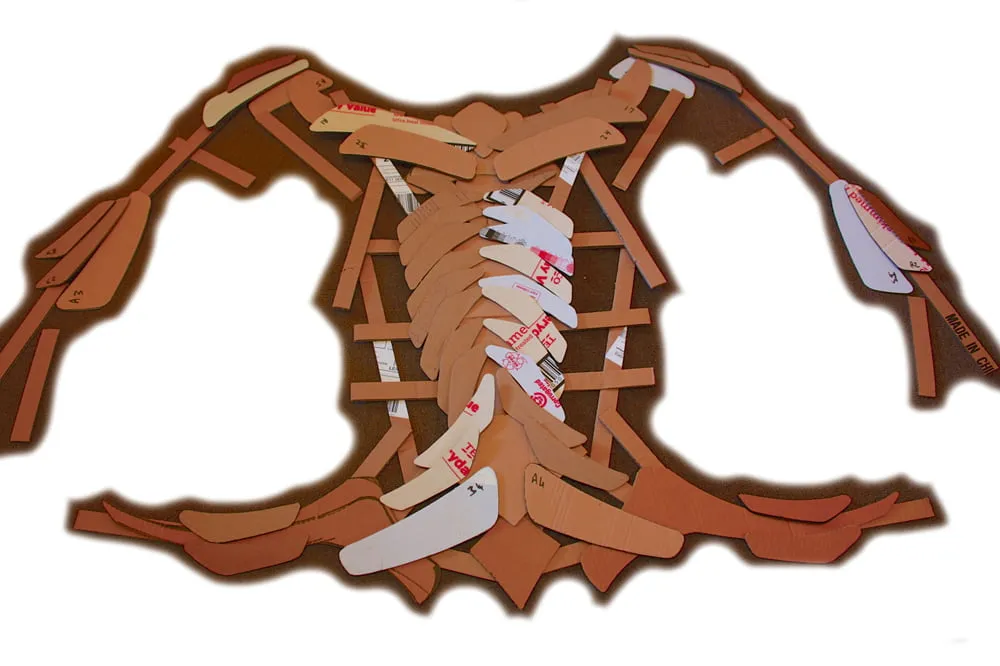
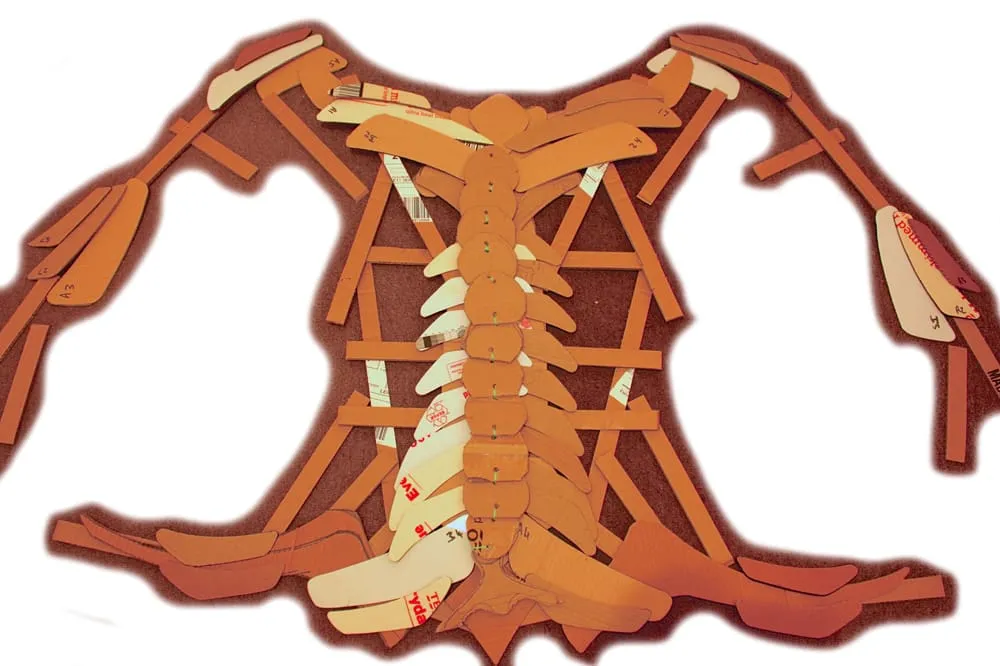
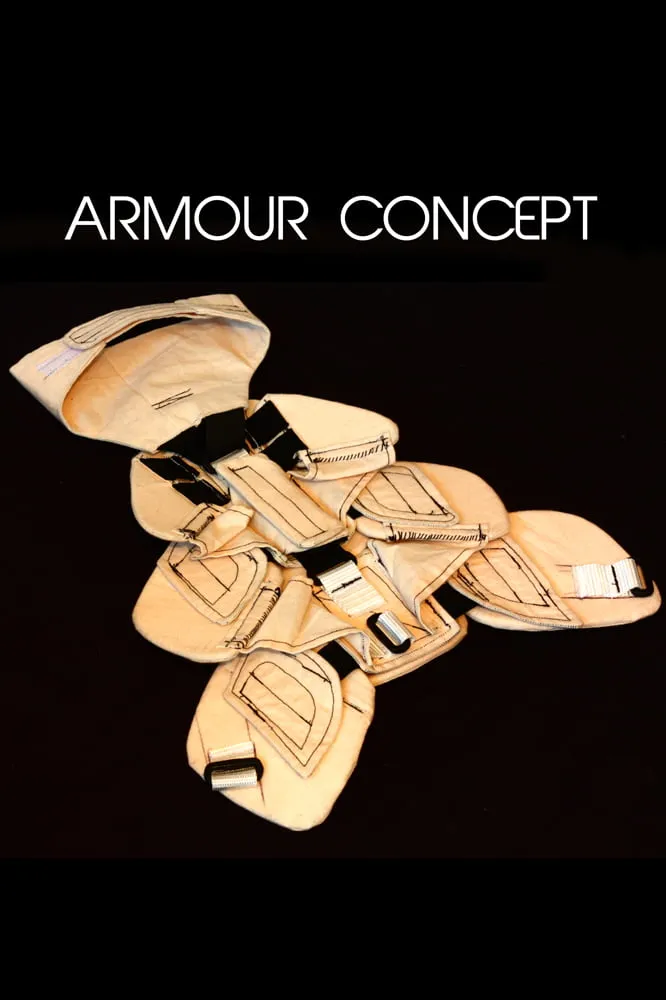
I cut out card pieces to rapidly explore how the body armour could look. Arranging and rearranging shapes on the floor, I narrowed down to six configurations that matched the aesthetic I was aiming for.
Prototype Stages
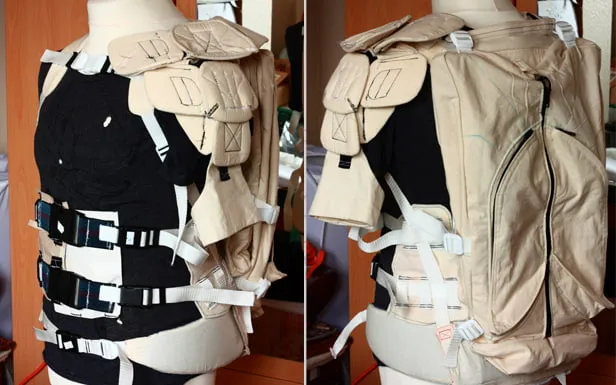
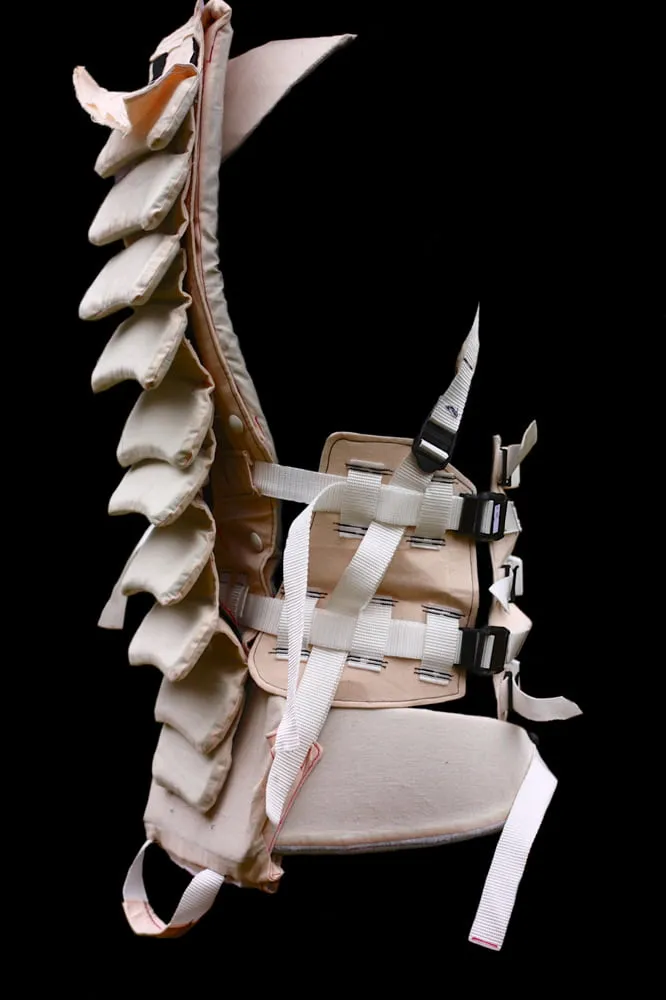
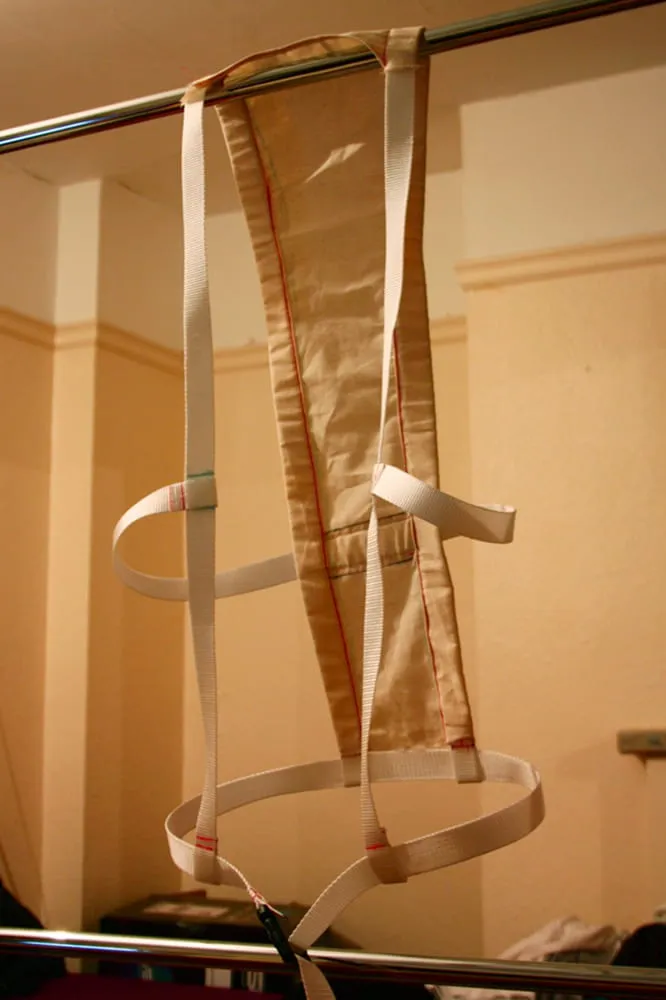
The development process moved through three physical prototypes. Each iteration resolved a specific problem — harness fit, module attachment, and armour articulation.
Real World Test
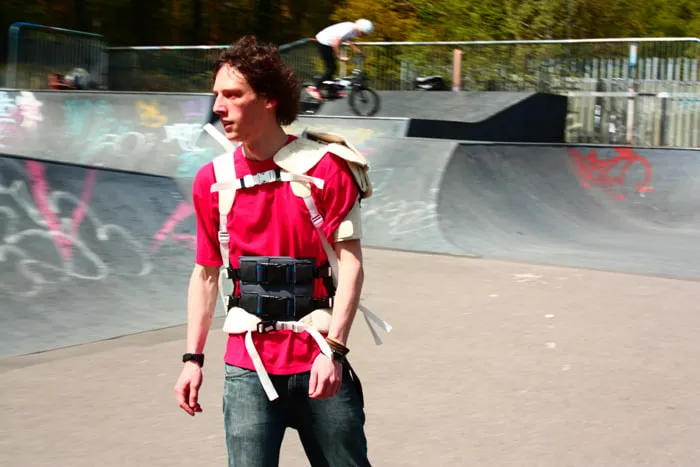
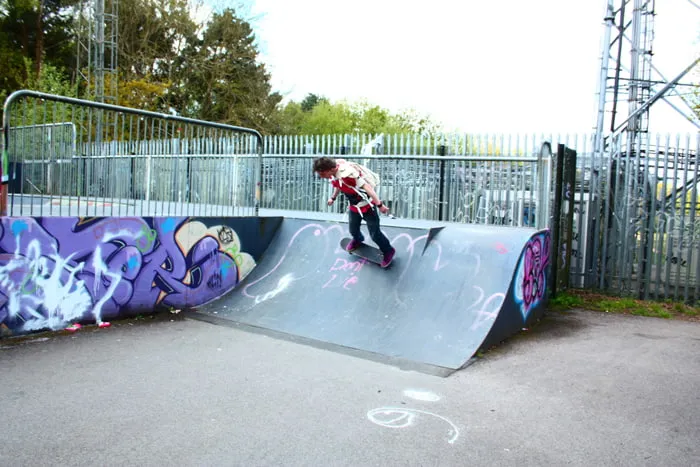
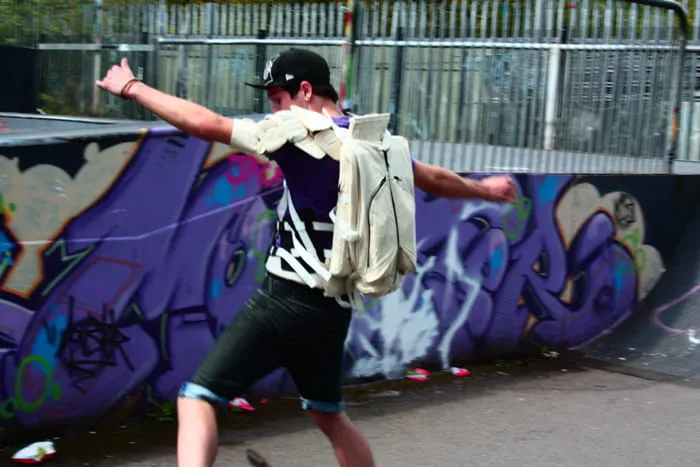
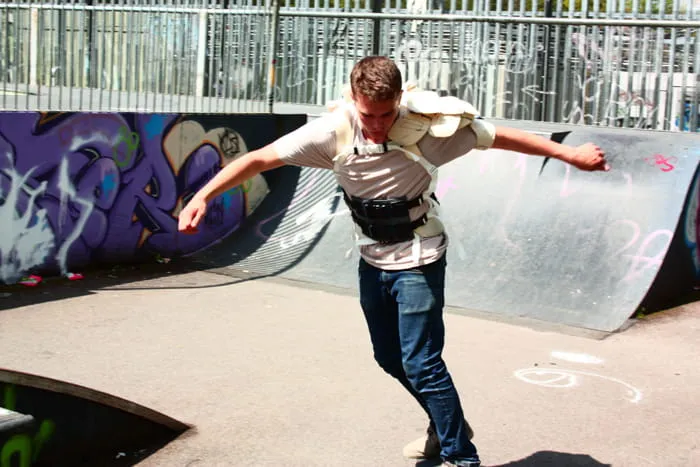
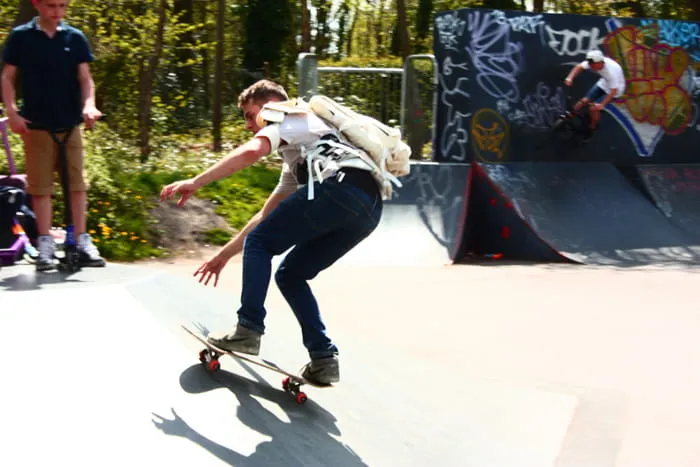
Before committing to final materials, I took the calico prototype to a skate park. Testing confirmed that wearer movement was not hindered and that the backpack position was practical for skating.

Final Design
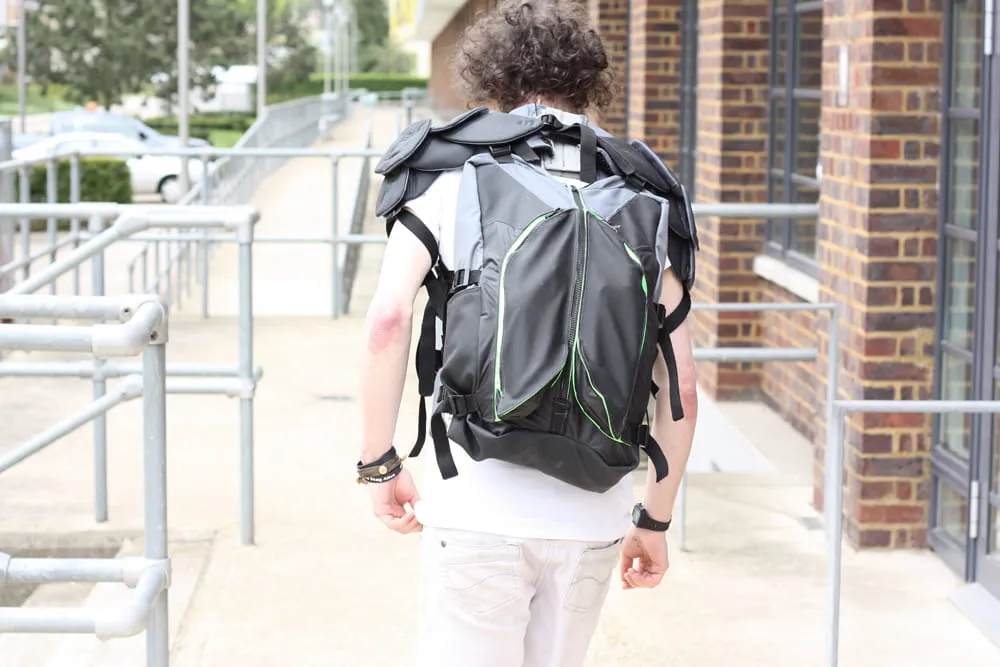
The finished product used abrasion resistant fabric on external surfaces, contrast interior lining, YKK heavy duty zippers, hardwearing webbing and fasteners, and waterproof container fabrics for device modules.
The harness is fully elasticated to allow movement. Modules are firmly secured but removable. Armour segments are colour-coded to assist re-attachment after removal.